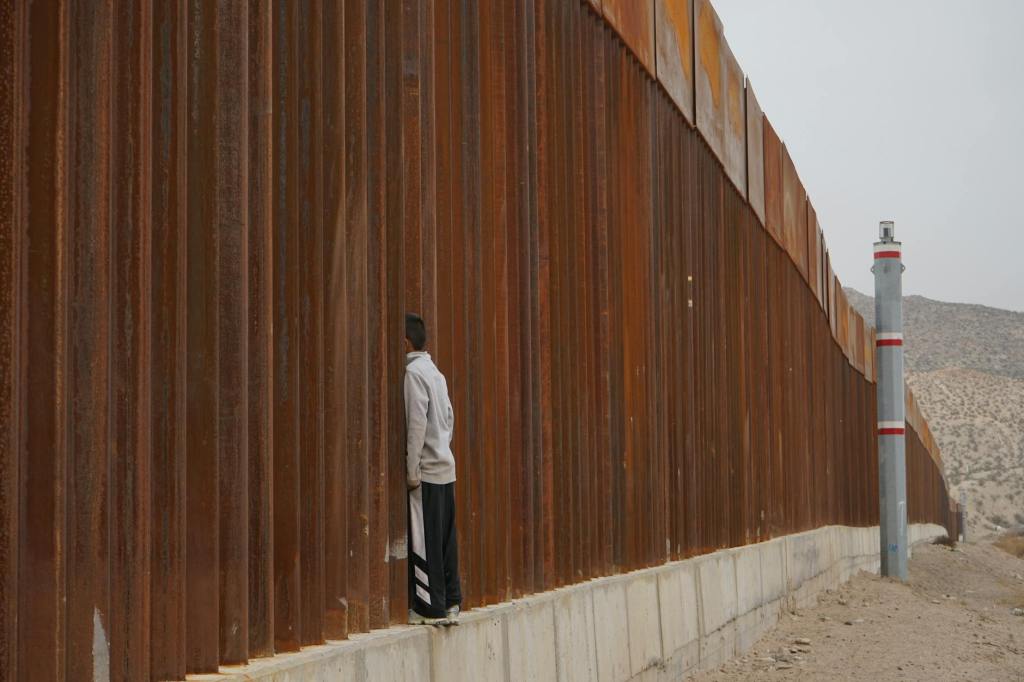
“Make me a sanctuary that I may dwell among them”
These are the powerful words in the Torah this week that precedes a lengthy description of the Tabernacle, both the raw materials needed and the design for this structure. The Tabernacle will serve as the center for the Israelites in their journey to the Promised Land—a place or worship, a place of gathering, a place for community.
The fact that the Torah includes blueprints for a building following lengthy descriptions of ritual and ethical laws reminds us of the importance of physical gathering space to create and sustain community.
Of course, Jewish community and tradition has often been maintained outside the bounds of physical space, and I have often said that what makes a congregation is less the physical structure than the spirit of the people who comprise the community.
And yet, containers can be important. That is what God is suggesting in commanding the Israelites to build a structure. Not that a structure is needed for God’s presence, nor can God’s presence necessarily be limited to one confined space. But it makes the divine connection easier, as the physical space can help channel the spiritual and emotional energy.
Over the past few years my congregation of Temple Beth Hatfiloh has added and grown our Tabernacle, allowing for a more varied and richer communal experience. And we have also used our physical space to live into our values of social justice and tikkun olam.
In 2016, during the first Trump Administration, beginning with the Muslim ban, the xenophobic targeting of immigrants was predominant. As Jews, issues of immigration take on increased scrutiny and importance both because of our own history as immigrants to this country, and because of our sacred texts that first describe a journey out of slavery to freedom, and then command us to treat the stranger well because of that journey.
At that time, my community joined with other faith communities and immigrant justice advocates to resist the oppressive policies. And we took on an action that was a unique opportunity for us because we are a faith community—we became a Sanctuary congregation, which meant that we were willing, should the need arise, to host someone seeking asylum in our building as they continued their legal fight. We would do this to protect them from deportation and to bring attention to the larger issue of those seeking refuge in this country.
It was a unique opportunity for us because of the special designation we had—along with hospitals and schools—as a “sensitive location.” An operational memo of Immigration and Customs Enforcement indicated that they would not carry out deportation orders at these “sensitive locations.” And while it was policy and not law, it provided a foundation to be able to support and protect people since within our walls, they would be safer.
When we took that step to be a Sanctuary congregation, we did not know where it would lead. We indeed had the opportunity to host a mother and child in our sacred space, developing both a deep relationship and deeper commitment to the issue of immigrant justice.
Now, during the second Trump Administration, our focus turns again to draconian immigration policies, including promises of mass deportation. However, the Administration has rescinded that ICE memo and nullified the designation of “sensitive locations.” The foundation upon which we offered sanctuary was taken away, and in theory, ICE would carry out enforcement at faith communities.
What this means for our future action on behalf of immigrant justice is unclear. What does remain clear is our commitment as a community to live out those values of what it means to be a sanctuary congregation and a sensitive location. My congregation of TBH will to me continue to be a sensitive location in that I personally will never inquire of anyone’s immigration status, nor will anyone’s status be a barrier to participation. If known, I will also not willingly share one’s immigration status with law enforcement, and I will resist any ICE enforcement on the grounds of our synagogue.
I’m proud that the Reconstructionist Movement has joined a lawsuit along with 25+ other faith community organizations to challenge the Trump Administration’s rescinding of the sensitive location memo. And we will continue to educate and organize our Jewish community to join the fight for immigrant justice, honoring our history and our sacred text. I invite you this Shabbat, designated as “Refugee Shabbat” by HIAS, to reflect on actions you can take to advance this fight.
In our common parlance, and here in the context of immigration, we speak of “sanctuary” as a place of safety. In our Torah, we speak of “sanctuary” as a place of holiness. Indeed, the only way a place can be holy, the only way we can invite God’s indwelling among us, is to create a place that is welcoming, inclusive, and safe for all.


 Rabbi 360
Leave a reply to brisklyphilosopher9cba7e4408 Cancel reply