I find some of the most heartfelt, searing, and enduring words in the Torah to be found in this past week’s parasha:
“Will you sweep away the innocent along with the guilty?”
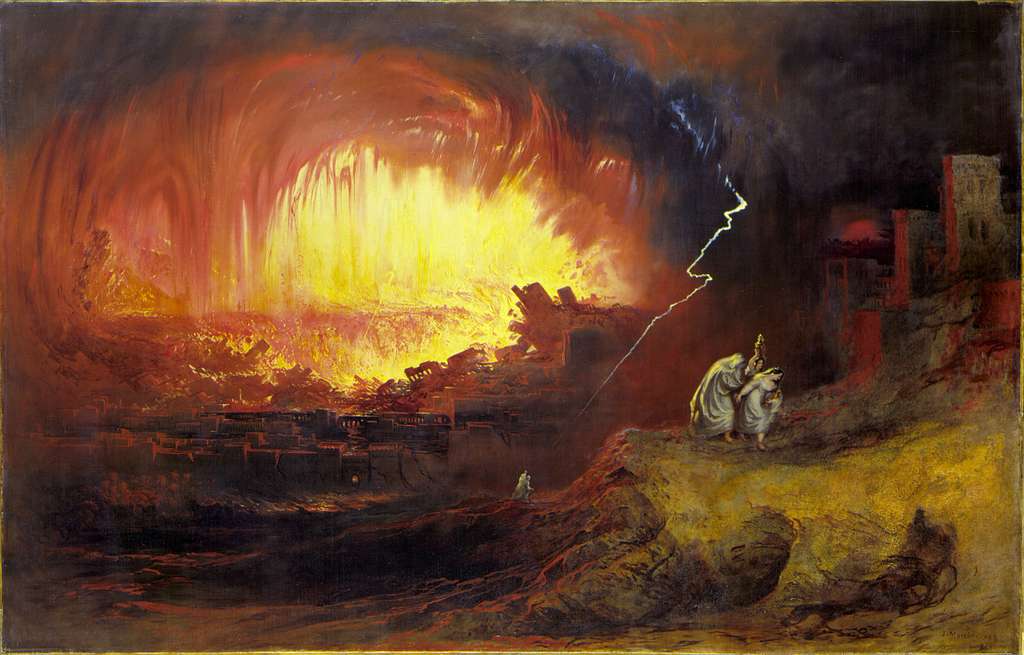
These words are found in the story of the impending destruction of Sodom and Gomorrah in Genesis 18. God has decided that the wickedness of these cities warrants their destruction. (After having destroyed the entire world two portions ago, I guess God is now narrowing focus and will destroy city by city.) But God feels that because there now exists a formal bond—a covenant—with Abraham, God can not withhold this information, and must tell Abraham of the plan in the spirit of honesty and open communication that is the foundation of any healthy relationship.
In response to hearing this news, Abraham, standing one-on-one with God, draws a step closer and says these words, “will you destroy the innocent along with the guilty?”
Abraham then begins to famously negotiate with God and implores God not to destroy the cities if 50 innocent people can be found within them. The back and forth continues—Abraham also charges God, “should not the Judge-of-All-the-World act justly?”—until God has agreed that should Abraham find ten innocent people living in the cities, then they will not be destroyed.
The text is silent about how Abraham goes about this undertaking. What we do know is, according to the Torah, the cities were destroyed, so we can assume that Abraham failed.
However, what is interesting is that by not focusing on Abraham pursuing this task, and by treating the fact of the destruction as almost an afterthought, a sidenote, the text seems to want to put the emphasis on the dialogue with God and the arguments made. The text wants us to pay attention to Abraham’s words and intentions. And by doing so, we can understand that if these are the arguments that Abraham makes with God, then these are the arguments that we must make with God. We, like Abraham, must be concerned with justice and with the innocent.
So many of us have been in so much pain over the events of the past month. Since the initial murderous Hamas attack that also resulted in the capture of hostages, and now with the Israeli response creating a staggering death toll in Gaza, including thousands of children, the violence and humanitarian crisis has been horrific and heartbreaking.
There are both no words and many words to describe how we are feeling. We have been stunned into silence because of anger, fear, and sadness. And we have made pleas, argued vociferously, shared articles and analysis.
Recently I tend to find myself in the “stunned silence” camp. It is hard to find the right words, especially since we put so much meaning (and manipulation) into phrases and use words against each other. What I can articulate is what I want, right now, for Israel and Palestine and us:
I, like Abraham, want to argue with God.
I want the hostages to be returned.
I want the fighting to cease.
I want corrupt governments to be replaced.
I want occupation to end.
I want people to be uplifted.
I want the healing of past trauma.
I want the end of all hatred, especially antisemitism and Islamophobia.
I want survival.
I want a future that is free, secure, peaceful, prosperous and hopeful.
I want a heart big enough to hold the many and not privilege the few.
I want the Judge-of-All-the-World to do justly.
I want the innocent to not be swept away.
And I want us to remember one of the most basic tenets of Judaism and perhaps all spiritual traditions: that we must be concerned with and support the most vulnerable among us. That we align ourselves with the people who are hurting and in need. Whether those people are in Israel, in Gaza, or here in Olympia, we must seek to—as the prayerbook says—“raise up those who are low.”
It is natural and necessary for us—like Abraham—to be primarily concerned with our own family, our own people, those with whom we share a common history. It is also important for us—like Abraham—to be concerned with others, those with whom we share a common future.
I also want us to not lose our humanity. Sometimes our pain and grief are so great about events far from us that we fail to treat well those who are near to us. We judge, we disrespect, we reject. In the face of these events in the Middle East where people’s lives are being devalued, we must not continue that cycle in our own community. We lose our humanity when we are unable to see the humanity in others. We lose our humanity when we, through word or deed, treat others as not worthy of love and respect. We lose our humanity when we are unable to generate empathy for those who are not us.
So let us, like Abraham, take care of each other.
Let us, like Abraham, think about the most vulnerable.
And let us, like Abraham, lift up our voices to God.
This is a list of organizations accepting donations to support people in Israel and Gaza. (My thanks to Reconstructing Judaism, JStreet, and my colleagues Rabbi Toba Spitzer and Rabbi Riqi Kosovske for compiling and circulating these resources. This is a selection and incomplete.)


 Rabbi 360
Leave a reply to Rev. Trish Vanni Cancel reply