As you can see from the reference to last week’s Torah portion, I wrote this to my congregation last week and forgot to post here. I now have a Substack as well and want to invite you to subscribe to me there as I figure things out!
“Blood pollutes the land.” (Numbers 35:33) is a verse from this week’s Torah portion of Matot-Masei. It is in reference to individual crime, but I knowingly take it out of that context because of the important value that is expressed: the shedding of blood is a stain on a community, a people, a nation. And if the individual shedding of blood pollutes the land, then how much more so does the shedding of blood on a grand scale.
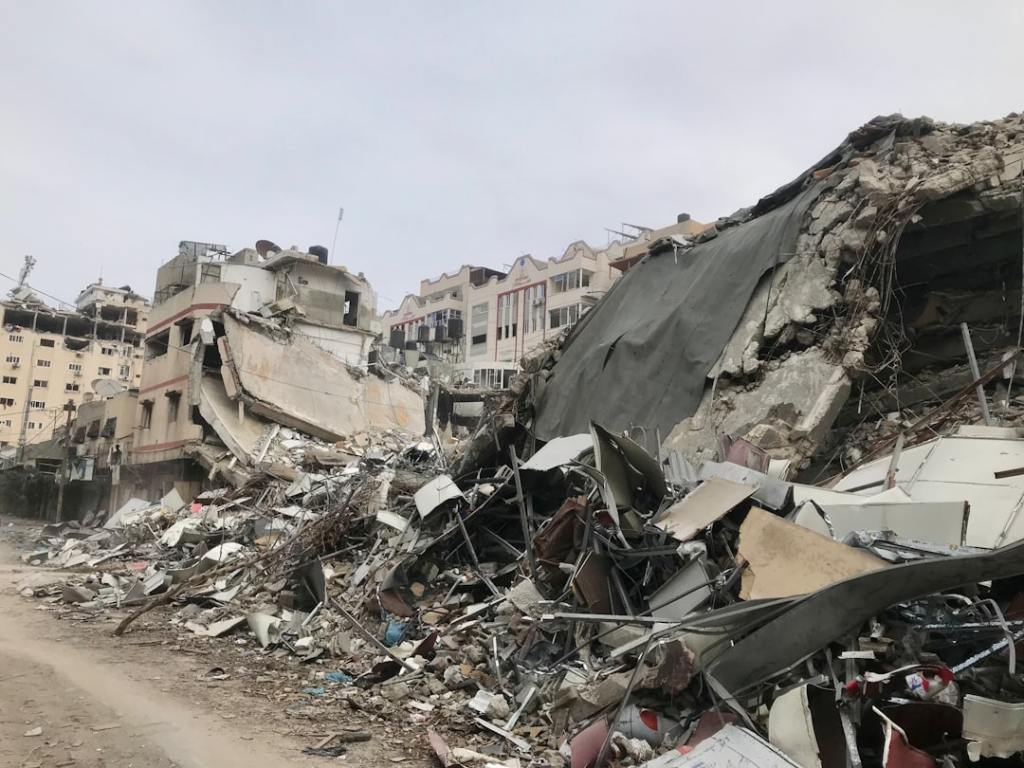
To get to the immediate point: the horrors of the starvation and famine that we are currently witnessing in Gaza are indefensible, and it is incumbent upon us to advocate for its end. I am angered and pained as I read the news and view the images that are coming out of Gaza because of both my concern for the Palestinians, rooted the fundamental value that all people are created in the image of God and worthy of life, love, and respect, as well as my commitment to Jewish peoplehood, my concern for the plight of the remaining hostages, and the continued existence and safety of the Jewish people. We can and must hold both at the same time, and in doing so I add my voice to the increasing number within the Jewish community here and in Israel in condemnation of these atrocities.
Indeed, I am inspired by the tens of thousands of Israelis who are also so motivated taking to the streets in protest of the government policies that have advanced this humanitarian crisis.
These protests are a stark reminder of an important truth we need to remember: people are (often) not their governments. This is something we are experiencing here at home as well, as (usually male) leaders privilege power and ego over the welfare of those they are meant to serve, and twist shared values and ideals to meet their own ends. How much better off would we be if we were served by those who led with humility and compassion.
If so, then we may not need to continue to remind ourselves of another basic truth: that just as humans can choose to tear down, so too can we choose to build up.
And another: that no child (well, no one, but especially children) should ever suffer.
We Jews can not see this war objectively. Rooted in Jewish peoplehood, we are connected to it. Which is why we need to raise our voices to advocate for the end to this violence and the creation of a different future. Our Jewish soul is on the line.
[Which is also why I am increasingly less interested in talking to people outside the Jewish community about Israel and Gaza, since we often do not share the same background, assumptions, history, and future. And which is why criticism of Israel that does not implicitly or explicitly take into concern Jewish safety feels to me threatening and antisemitic. But that is perhaps for another time.]
The horrors of October 7 are still resonant for us. At the same time, I fear they are overshadowed by an ongoing response that inflicts death and injury on the innocent with no end in sight and no plan for what is to come. I fear the numbness sometimes felt in the face of cruelty. I fear the desire to seek cause or blame that inhibits the alleviation of suffering.
And I fear that the comfort of easy slogans is taking the place of seeking actual complex solutions. We know for example this is has become a regional conflict that will require a regional solution. Hamas, Hezbollah, Lebanon, Egypt, Iran, Saudi Arabia, among others in addition to Israel (including, of course, the United States) will need to be a part of the forging of peace and the rebuilding of the region. The sheer enormity of it is overwhelming to me. And regarding this I am only a student, I do not have a particular direction or wisdom to offer.
But in the face of that enormity—and the ongoing suffering—there are some things I believe we can do as Jews (in addition to committing to the richness and diversity of Jewish life):
Condemn the atrocities.
Donate to relief funds. (We give monthly to World Central Kitchen).
Advocate (to lawmakers and leaders) for an end to raising up arms and perpetrating violence, for the return of the hostages, for the commitment to provide aid and supplies, and for the creation of a just and peaceful resolution of mutual recognition that both acknowledges the history of and guarantees the future of all the inhabitants of the land.
And, of course, pray.
To that last point, I offer you again these words I wrote not too long ago:
May all be fed and free,
may all be safe and seen.
May the bombs not fall
on hospital or school,
home or market,
or anywhere on this earth.
May hate subside and love increase.
May our broken hearts and bodies
and our wounded souls and spirits
find healing and repair.
May the power of the many
outweigh the hubris of the few
and for our sake
and the sake of our ancestors
and our children
may all war cease.
And I wish to add to this prayer a last line:
And may no more blood pollute the land.
Ken Yehi Ratzon, let it be so.


 Rabbi 360
Thanks for continuing the conversation!